




Advertisement
Advertisement
It's currently a challenging period for those who love animals. First, there were reports of 'zombie bunnies', and now 'zombie squirrels' are causing concern as many cute creatures appear to be suffering.
In the US, people have begun noticing that some rabbits have developed large growths on their faces, heads, shoulders, and necks.
These rabbits have been dubbed zombie rabbits or Cthulhu bunnies due to their resemblance to characters from H.P. Lovecraft's fiction. This has led people to keep their distance from these fluffy animals and, understandably, worry about their own pets.
Although it was confirmed that the affected rabbits were wild and that the virus was unlikely to spread to pets and humans, it now appears that squirrels are also being affected by a similar condition, following several alarming sightings in the US.
Advert
'Zombie squirrels' have been observed in areas like Maine and various parts of Canada.
Witnesses have reported seeing these unfortunate animals with 'pus-filled' sores and hairless patches on their bodies.
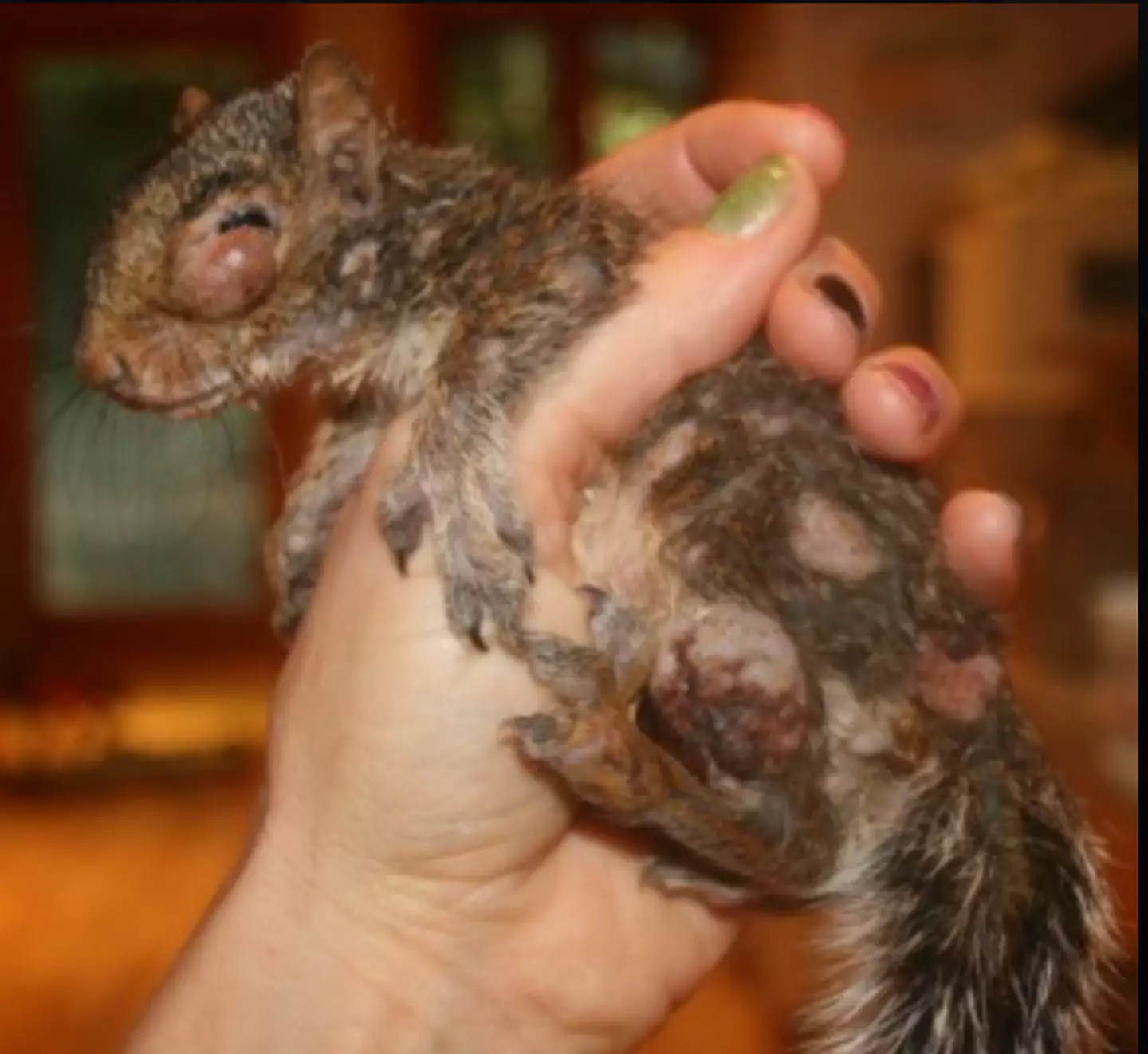
Social media users have been posting photos of the squirrels on Twitter and Reddit, seeking information about what might be troubling their garden visitors.
Advert
Reports initially emerged in 2023 but have recently gained more attention.
One person on Reddit remarked, “At first I thought it was eating something from my front beds, but then I realized it was on its face," after noticing a squirrel with what appeared to be a tumor on its mouth.
According to the Daily Mail, these squirrels may be afflicted with squirrel fibromatosis, a viral skin disease caused by leporipoxvirus.
The virus spreads through direct contact between healthy and infected squirrels, via the lesions or saliva of the infected ones.
Advert
It is said to be transmitted in a manner similar to how herpes or cold sores are spread among humans.
Many online users initially suspected it might be squirrelpox, which is apparently more common in the UK and severely affects red squirrels, often fatally.
In contrast, leporipoxvirus is responsible for the wart-like tumors that ooze. Quite a sight.
Advert
Fortunately, in most instances, the condition resolves itself.
Shevenell Webb, a wildlife biologist from Maine’s Department of Inland Fisheries and Wildlife, told Bangor Daily News that these squirrels pose no threat to humans, pets, or birds. However, birdfeeders in gardens can become hotspots for the virus to spread, given the close contact between animals.
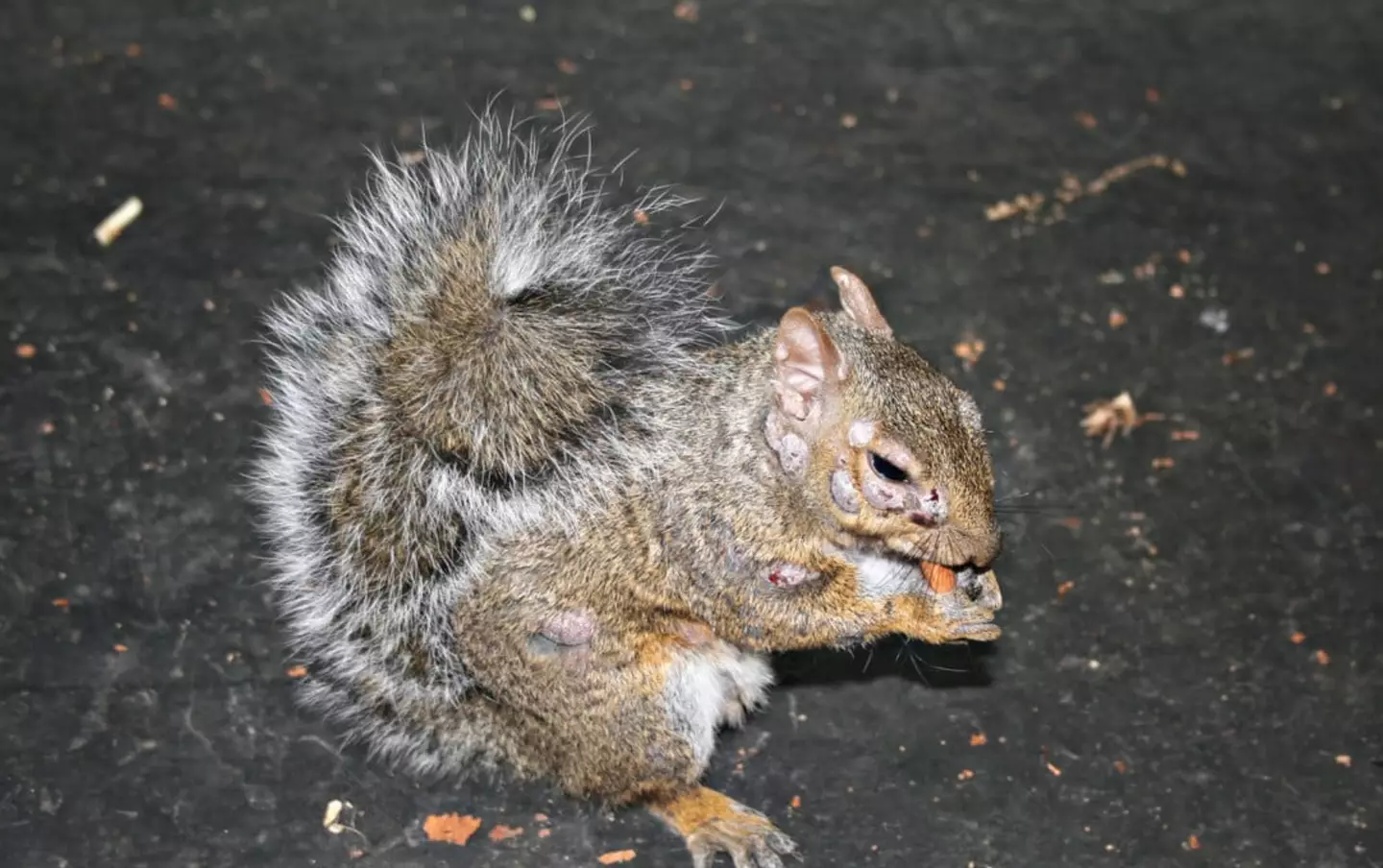
Eating seeds contaminated with the saliva or fluids of an infected squirrel might be a contributing factor.
Advert
“It’s like when you have a large group of people; if someone is sick and it spreads easily, others are likely to catch it,” Webb explained. "Like many, I enjoy watching birds. Unfortunately, you might attract several [squirrels] to that feeder, risking exposure if one carries the virus.”
She also emphasized the importance of leaving the animals undisturbed.
“I would not recommend trying to capture a squirrel that has the virus,” Webb cautioned, “It is naturally occurring and will resolve in time.”
It typically takes four to eight weeks for the condition to clear up.
Advertisement
Advertisement


Advertisement


